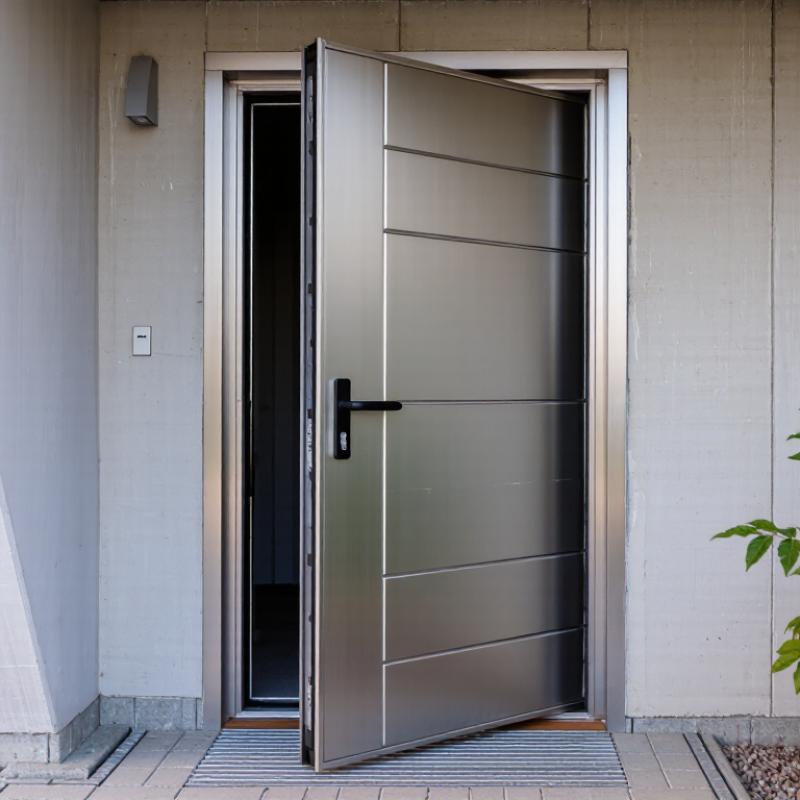
| Main Door Materials | Galvanized steel, stainless steel, aluminum, and steel-aluminum composite constructions. | Material selection affects corrosion resistance, structural strength, weight, thermal performance, appearance, and maintenance requirements. | Manufacturers provide material options suited to coastal, urban, commercial, residential, and high-traffic environments. |
| Door Configurations | Single-leaf, double-leaf, unequal double-leaf, pivot, sliding, and paired entrance systems. | Configuration is generally determined by opening width, traffic flow, accessibility needs, structural conditions, and project design. | Configuration flexibility enables suppliers to serve apartment buildings, villas, offices, hospitality projects, and public facilities. |
| Construction Types | Hollow metal doors, insulated metal doors, panel doors, glazed metal doors, and custom fabricated entrance units. | Insulated cores can improve thermal and acoustic performance; glazed sections require suitable safety glazing and frame design. | Manufacturers bridge the requirements between decorative residential entrances and durable architectural or commercial systems. |
| Surface Finishes | Powder coating, wet paint, brushed stainless steel, polished stainless steel, anodized aluminum, and wood-effect finishes. | Finish systems should be selected according to exposure conditions, color requirements, cleaning frequency, and expected service life. | Finish customization allows importers and project contractors to match local architectural styles and planning requirements. |
| Thermal Performance | Thermally improved frames, insulated door leaves, weather seals, and threshold solutions. | Performance depends on the complete door assembly, including leaf, frame, glazing, seals, threshold, installation, and surrounding wall. | Thermal options are important for buyers serving regions with hot summers, cold winters, or energy-efficiency regulations. |
| Weather Resistance | Exterior-grade steel and aluminum doors with protective coatings, drainage details, gaskets, and corrosion-resistant hardware. | Durability is influenced by coating quality, substrate preparation, water management, exposure level, and maintenance practices. | Suppliers help global buyers adapt door specifications to humid, rainy, high-salt, high-UV, and dusty climates. |
| Security Features | Multi-point locking systems, reinforced door leaves, security cylinders, anti-pry details, concealed hinges, and safety glazing options. | Security performance varies by the complete assembly and should be verified through applicable test reports or project specifications. | Security-focused products support residential entrance, multi-family housing, office, retail, and controlled-access applications. |
| Fire and Smoke Applications | Fire-rated metal door assemblies, smoke-control doors, fire-rated frames, and compatible hardware sets. | Fire performance applies to a tested and correctly installed assembly, not only to the door leaf. Ratings and test methods vary by jurisdiction. | Manufacturers can support code-sensitive projects when buyers request documented ratings, approved hardware, and installation requirements. |
| Accessibility and Safety | Low-resistance opening systems, suitable clear widths, lever handles, vision panels, safety glazing, and threshold options. | Accessibility requirements depend on local building codes and project use; clear opening, maneuvering space, hardware, and closing force are key considerations. | Compliance-oriented design helps contractors and developers meet public-building, hospitality, healthcare, and residential access requirements. |
| Customization Capability | Non-standard sizes, decorative panels, vision panels, transoms, sidelights, hardware preparation, colors, and digital drawings. | Custom orders require confirmed opening dimensions, wall conditions, handing, swing direction, hardware requirements, and finish schedules. | Customization is a major differentiator for project-based buyers who need coordinated architectural packages rather than standard retail units. |
| Hardware Integration | Hinges, closers, panic exit devices, access-control preparation, pull handles, locks, door viewers, and weather seals. | Hardware compatibility must be checked against door weight, usage frequency, security level, fire requirements, power supply, and local code. | Integrated hardware coordination reduces installation conflicts and supports complete-door procurement for international projects. |
| Quality Documentation | Technical drawings, material declarations, finish specifications, installation instructions, packing lists, and inspection records. | Documentation should identify dimensions, tolerances, materials, hardware, finishes, testing scope, and packaging requirements. | Clear documentation helps importers, architects, quantity surveyors, customs agents, and installers manage cross-border procurement. |
| Testing and Compliance | Testing may cover fire resistance, air permeability, water tightness, wind load, security, acoustics, thermal performance, and corrosion resistance. | Applicable standards differ by destination market; buyers should confirm whether reports are valid for the intended product configuration and jurisdiction. | Compliance-ready suppliers reduce approval risk and help project teams align products with local building regulations and tender requirements. |
| Production Model | Standard catalog production, made-to-order manufacturing, project batch production, and fully custom fabrication. | Production planning typically depends on approved drawings, material availability, finish selection, hardware confirmation, and order quantity. | Different production models allow buyers to balance unit cost, customization, minimum order quantity, and delivery scheduling. |
| Export and Logistics Support | Protective packaging, palletization, container loading plans, shipping marks, export documentation, and replacement-part coordination. | Metal doors require protection against scratching, moisture, deformation, and hardware damage during handling and international transport. | Logistics capability is essential for distributors and contractors managing containerized shipments, customs clearance, and multi-site deliveries. |
| Primary Buyer Groups | Importers, distributors, door contractors, architects, developers, general contractors, and building-material wholesalers. | Each buyer group usually prioritizes a different combination of price, compliance, customization, delivery reliability, technical support, and after-sales service. | Manufacturers serve as production partners across both recurring distribution programs and one-time architectural projects. |
| Common End-Use Sectors | Residential housing, apartment developments, hotels, offices, retail spaces, education, healthcare, industrial buildings, and public facilities. | Performance requirements vary according to occupancy, traffic intensity, security exposure, fire strategy, climate, and maintenance conditions. | Broad application coverage allows manufacturers to adapt product specifications to different building types and procurement standards. |
| Buyer Evaluation Criteria | Material quality, manufacturing consistency, testing evidence, customization control, communication, packaging, delivery performance, and warranty terms. | A reliable evaluation should compare complete assemblies, documented specifications, sample quality, quality-control procedures, and total landed cost. | Structured supplier evaluation helps global buyers identify suitable production partners without relying solely on unit price. |