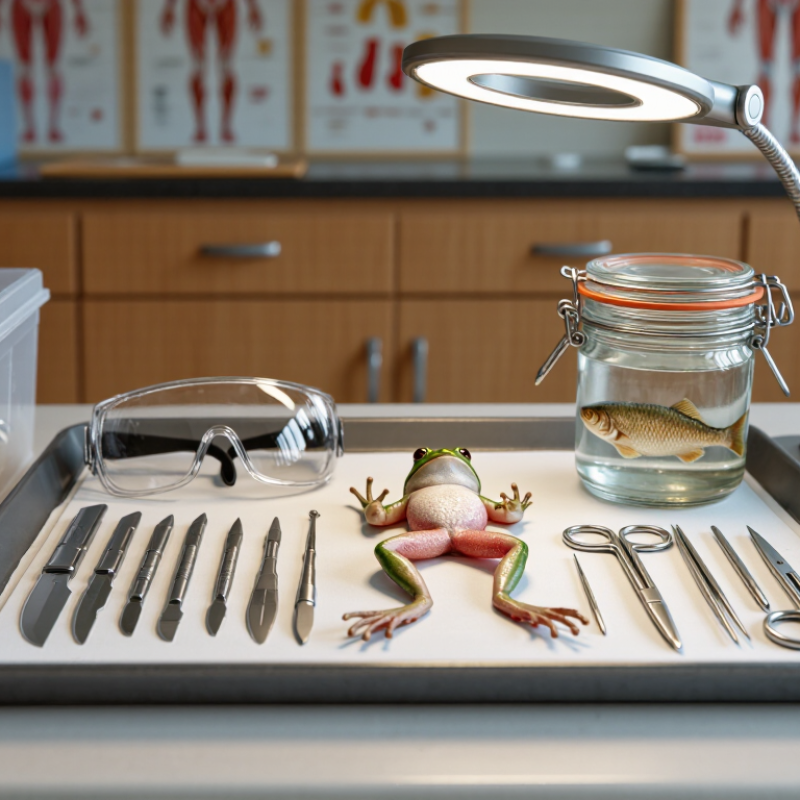
| Young beginners | Basic introductory kit | Blunt or semi-blunt probe, forceps, small scissors, dropper, dissecting tray, reusable pins, and a simple instruction guide | Learning tool identification, observation, symmetry, and basic handling techniques | Plant tissues, large invertebrates, and teacher-approved prepared materials | Lower injury risk, easy to control, and suitable for supervised first experiences | Limited cutting precision and usually unsuitable for detailed vertebrate anatomy | Close adult supervision, eye protection, hand washing, and safe storage of sharp tools |
| Middle-school learners | School starter dissection kit | Scalpel or replaceable blade, forceps, dissecting scissors, blunt probe, teasing needle, tray, pins, ruler, and labeled storage case | External anatomy, organ location, tissue comparison, and recording observations | Plant organs, insects, fish, small invertebrates, and approved preserved specimens | Balances essential instruments with manageable complexity and cost | May not include enough specialized tools for fine vascular or nerve dissection | Teacher demonstration, cut-resistant handling practices, gloves where appropriate, and specimen-fluid precautions |
| High-school biology students | Intermediate anatomy kit | Scalpel with secure handle, multiple forceps, fine and blunt probes, dissecting scissors, teasing needle, tray, pins, and measurement tools | Comparative anatomy, organ systems, tissue structure, and evidence-based laboratory reports | Approved preserved vertebrate specimens, invertebrates, and plant material | Provides better control for separating tissues and locating organs | Requires stronger supervision, correct disposal procedures, and more careful maintenance | Follow the specimen safety data sheet, use ventilation requirements, wear eye protection, and dispose of blades correctly |
| College anatomy learners | Precision dissection kit | Fine-point and blunt forceps, precision scissors, scalpel handle with compatible blades, probes, retracting pins, tray, and measurement instruments | Detailed anatomical planes, connective tissues, organ relationships, and comparative structures | Higher-quality preserved specimens and prepared laboratory materials approved by the institution | Greater precision, improved tissue separation, and better suitability for repeated laboratory work | Higher skill requirement and greater risk of damaging small structures or instruments | Institutional laboratory training, sharps procedures, appropriate ventilation, and chemical-waste compliance |
| Microscopy-focused learners | Dissection-and-slide preparation kit | Fine forceps, teasing needle, razor or approved sectioning tool, droppers, slides, coverslips, small tray, and specimen labels | Preparing thin tissue samples, comparing tissue types, and connecting visible anatomy with cell structure | Soft plant tissues, thin animal tissues, prepared samples, and teacher-approved temporary mounts | Supports both macroscopic handling and microscopic observation | Does not replace a microscope, stains, or laboratory-quality sectioning equipment | Use approved cutting tools only, protect eyes and hands, and handle stains according to their labels and safety data sheets |
| Eco-conscious classrooms | Reusable, low-waste kit | Durable stainless-steel instruments, washable tray, reusable pins, replaceable blades, and minimal single-use packaging | Repeated classroom practice, plant dissection, tool-care skills, and waste-management discussions | Plant material, invertebrates, and specimens permitted by the school or laboratory | Reduces disposable-tool use and can be shared across multiple lab sessions | Requires thorough cleaning, drying, inspection, and sterilization or disinfection when appropriate | Never reuse contaminated disposable blades; follow institutional decontamination and biological-waste rules |
| Home or independent adult learners | Non-preserved specimen exploration kit | Forceps, blunt probe, scissors, tray, hand lens, ruler, gloves, specimen containers, and observation sheets | Plant anatomy, food-tissue observation, morphology, measurement, and structured journaling | Fresh plant material and legally obtained, non-hazardous specimens | Avoids the storage and chemical-handling issues associated with preserved specimens | Offers less access to complex animal anatomy and may have a shorter specimen-use window | Use clean tools, avoid unknown biological material, protect hands and eyes, and follow local disposal requirements |