
2026 Best Aeration Process for Efficient Wastewater Treatment?

Wastewater treatment is a vital process for protecting public health and the environment. The "Aeration Process In Wastewater Treatment" plays a critical role in this field. According to a report by the Water Environment Federation, efficient aeration can enhance biological treatment by up to 50%. This not only improves water quality but also reduces energy costs. Industry expert Dr. Emily Hartman emphasizes this point, stating, "Effective aeration is key for sustainable wastewater management."

Despite advancements, challenges remain in optimizing aeration systems. Many facilities struggle with energy consumption and inconsistent performance. The need for innovations is clear. As treatment facilities strive for efficiency, understanding the latest aeration technologies is essential.

The push for sustainable practices leads to ongoing debates on best methods. In 2026, identifying the most effective aeration processes will be crucial for future developments. The conversation continues, focusing on how to overcome barriers and improve treatment outcomes.

2026 Best Aeration Process for Efficient Wastewater Treatment?

Overview of Wastewater Treatment Aeration Processes

Aeration is a crucial step in wastewater treatment. It enhances the breakdown of organic matter. This process involves introducing air or oxygen into wastewater. Different aeration techniques exist, each with unique benefits and challenges.

The most common methods include activated sludge, trickling filters, and diffusion aeration. According to a 2021 industry report by the Water Environment Federation, approximately 90% of wastewater plants use activated sludge systems. These systems promote microbial activity and are efficient. However, they require precise control of oxygen levels, and improper management could lead to inefficiencies.

Despite their advantages, aeration processes can be energy-intensive. Reports indicate that aeration accounts for nearly 50-70% of total energy usage in treatment plants. It's vital to explore more energy-efficient alternatives, like membrane bioreactors or advanced oxidation processes. While these newer methods show promise, their implementation comes with high costs and technical difficulties. Continuous research is essential to balance effectiveness with sustainability in aeration technologies.

Importance of Aeration in Wastewater Treatment Efficiency

Aeration plays a crucial role in wastewater treatment. It promotes the growth of beneficial microorganisms. These microbes break down organic materials, reducing contaminants. With adequate oxygen levels, the process becomes more efficient.

Different aeration methods exist. Conventional techniques include surface aerators and diffused aeration. Both have their pros and cons. Surface aerators are less expensive, but they can be less efficient. Diffused aeration offers better oxygen transfer rates but requires more energy. This balance between cost and efficiency is essential to explore.

Despite advancements, aeration processes still face challenges. Some systems struggle with maintaining optimal oxygen levels. This can lead to inefficiencies in treatment. Reflection on these shortcomings can drive innovation. The quest for better aeration is ongoing. Testing new methods could yield improved results.

New research often sheds light on more effective strategies. These improvements are necessary for future wastewater solutions.

Types of Aeration Techniques Used in Wastewater Treatment

Aeration is crucial in wastewater treatment, enhancing the breakdown of pollutants. Various techniques exist, each with distinct advantages. The choice of method often hinges on facility size, type of wastewater, and budget constraints.

Mechanically agitated aeration is one common technique. It employs a mechanical mixer to introduce air. This method is straightforward and effective but can be energy-intensive. Another approach is diffused aeration, where fine bubbles release air into the wastewater. This technique ensures better oxygen transfer and can improve the treatment efficiency.

There are also innovative options like surface aerators, which draw water into the air. However, they may not be suitable for all environments due to their noise and odor. Despite their potential for efficiency, all aeration techniques have limitations. Factors such as maintenance and operational costs must be considered carefully. Each method has trade-offs that require thoughtful evaluation.

Factors Influencing the Selection of Aeration Processes

Selecting the right aeration process for wastewater treatment is crucial. Several factors significantly influence this choice. Energy efficiency is one key consideration. Data shows that aeration can account for up to 60% of energy costs in a treatment facility. Choosing a process that minimizes energy usage, while maintaining efficiency, is essential for sustainable operations.

Another factor is the type of wastewater being treated. Industrial wastewater often requires different treatment methods compared to residential sewage. The presence of specific contaminants shapes the aeration process selection. Reports indicate that tailored processes can improve removal efficiencies by over 30%. Meanwhile, adaptability remains important, as varying conditions can affect performance.

Cost is also a major consideration. Initial capital investment and ongoing operational costs must be weighed against potential energy savings. Some advanced aeration technologies may come with higher upfront costs. However, projected long-term savings can justify these investments. A comprehensive analysis helps in understanding trade-offs. Identifying the best aeration method requires careful consideration of these factors to enhance overall system performance and reliability.

2026 Best Aeration Process for Efficient Wastewater Treatment

This chart represents the efficiency of different aeration processes in wastewater treatment. The factors influencing the selection of the aeration processes are depicted, highlighting the average oxygen transfer efficiency (OTE) and energy consumption per cubic meter of treated water.

Future Trends in Aeration Technologies for Wastewater Treatment

The landscape of wastewater treatment is evolving rapidly. Aeration technologies are at the forefront of this innovation. Research indicates that inefficient aeration processes account for nearly 30% of energy consumption in wastewater treatment plants. This inefficiency urges the need for advanced solutions that can optimize performance while reducing costs.

Emerging trends highlight the importance of automated control systems. These systems adjust the aeration process in real-time based on the chemical demands of the wastewater. According to recent studies, facilities that adopted automated aeration control saw energy reductions of up to 35%. This technology not only minimizes energy use but also improves treatment efficiency. Despite these advances, integrating new technologies presents challenges. Training personnel and adapting infrastructure can be time-consuming and expensive.

Furthermore, there's a growing emphasis on using renewable energy sources to power aeration systems. Solar and wind energy can significantly offset operational costs. However, the initial investments can be daunting. Data shows that, while these technologies promise long-term savings, many plants hesitate due to upfront hurdles. Ensuring sustainability in aeration practices is crucial, yet operational complexities remain. These factors demand ongoing research and reflection from industry experts to shape future developments.

2026 Best Aeration Process for Efficient Wastewater Treatment

Aeration Technology Efficiency (%) Energy Consumption (kWh/m³) Operational Cost ($/m³) Maintenance Frequency (Times/Year)
Fine Bubble Aeration 85 0.5 0.10 2
Surface Aeration 75 0.8 0.12 3
Diffused Aeration 80 0.6 0.11 2
Membrane Aerated Biofilm Reactor 90 0.4 0.09 1
Ballasted Flocculation 82 0.7 0.10 2
Find the Right Repair Product for Your Project

Need to find the most appropriate product for the needs of your project? We can help because we have over 70 years of experience servicing the industry with every kind of project, from Do-it-yourself projects to large skyscrapers. Package Pavement has the experience, the knowledge and the products to help every project succeed.
Quikrete Repair Products
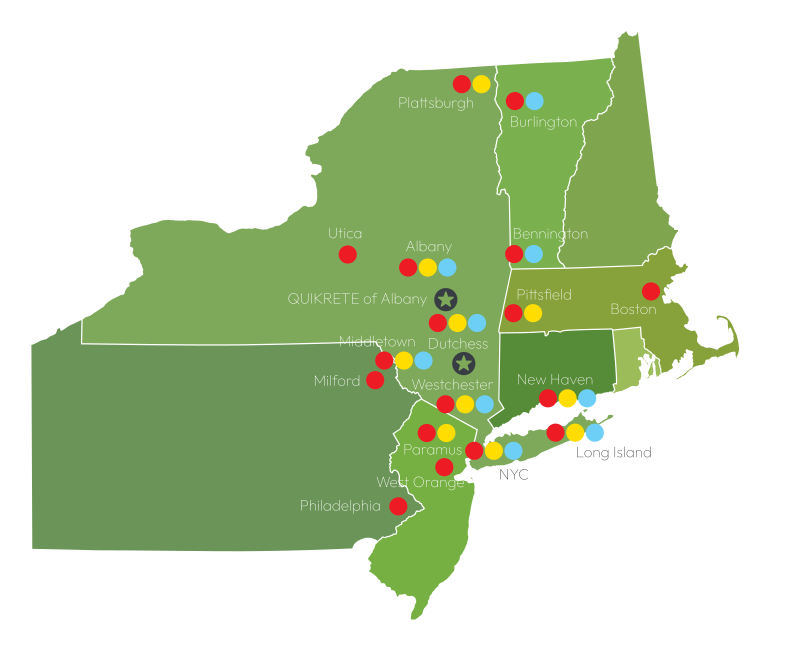
Legend
Package Pavement has two convenient locations in Stormville, NY (Dutchess County) and Ravena, NY (Greene County) to serve the Northeastern Region with bagged concrete, blacktop, mortar, and repair products. This map gives a general idea of where we service and the product lines we offer.
Package Pavement Products
Quikrete Products
Spec Mix Products
map

Our Brands Websites